
GCSE Spanish Tutoring
Exams bring pressure — for your child, and for you. One-to-one GCSE Spanish tutoring gives your child the focused attention a classroom of thirty just can't: someone who knows exactly where they're strong, where they're stuck, and what it'll take to close the gap before the exam.
I'm Veronica MacLarnon, a native Spanish speaker from Guatemala and a qualified teacher with over 20 years' experience. I tutor GCSE Spanish across AQA, Edexcel and OCR — tailoring every lesson to your child, not a generic syllabus recited the same way to everyone.
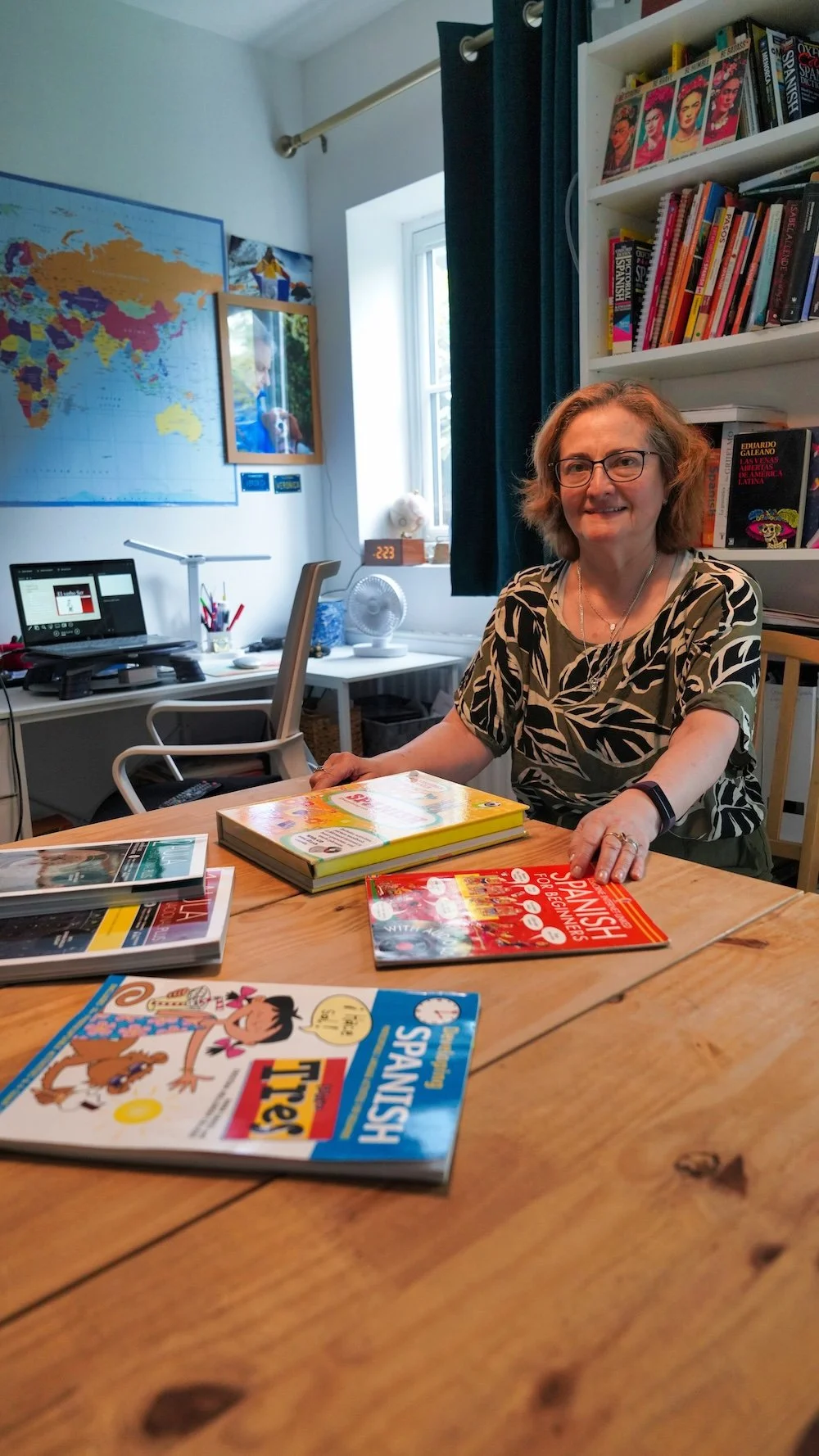
What GCSE tutoring with me looks like
No two students need the same thing, so no two lesson plans look the same. Depending on where your child is starting from, we build sessions around:
Vocabulary that sticks — not just lists to cram, but words used enough times in context to become automatic
Grammar explained clearly, without the jargon that makes it feel harder than it is
Speaking confidence — the part of the exam most students dread, practised until it stops feeling like a performance
Exam technique specific to their board — knowing what AQA, Edexcel or OCR examiners are actually looking for in each paper
Face-to-face or online — whichever works for you
Sessions take place either face-to-face at my studio near Great Missenden, or nationwide over Microsoft Teams — whichever suits your family best. Many parents start face-to-face and move to Teams once exam season gets busy, or vice versa. Either way, it's the same one-to-one attention and the same lesson plan built around your child.
Pricing
GCSE individual tutoring: £40 per lesson
Pre-GCSE (teenagers, KS3): £35 per lesson
Getting started early — before Year 10 — gives us more time to build a real foundation rather than cramming in the final months. But whenever your child is starting, the first lesson is always a free trial, so you can both see if it's the right fit before committing to anything.
Why parents choose one-to-one tutoring
A classroom teacher has thirty students and one lesson plan. I have one student and their exam board, their weak spots, and their deadline. That difference is where GCSE grades actually move — not from more content, but from the right content, explained the right way, for that one student.